Archive notes / 03 · Many places, a wider world

Beyond Beijing,
within the world.

The movement did not take place only in Tiananmen Square. Students, residents and workers expressed support in many cities; the June crackdown also affected places outside Beijing. Governments, journalists, exiles and ordinary people abroad responded in different ways.

Across ChinaInternational response
Image archive / 1989–2020

Scenes, aftermath and remembrance

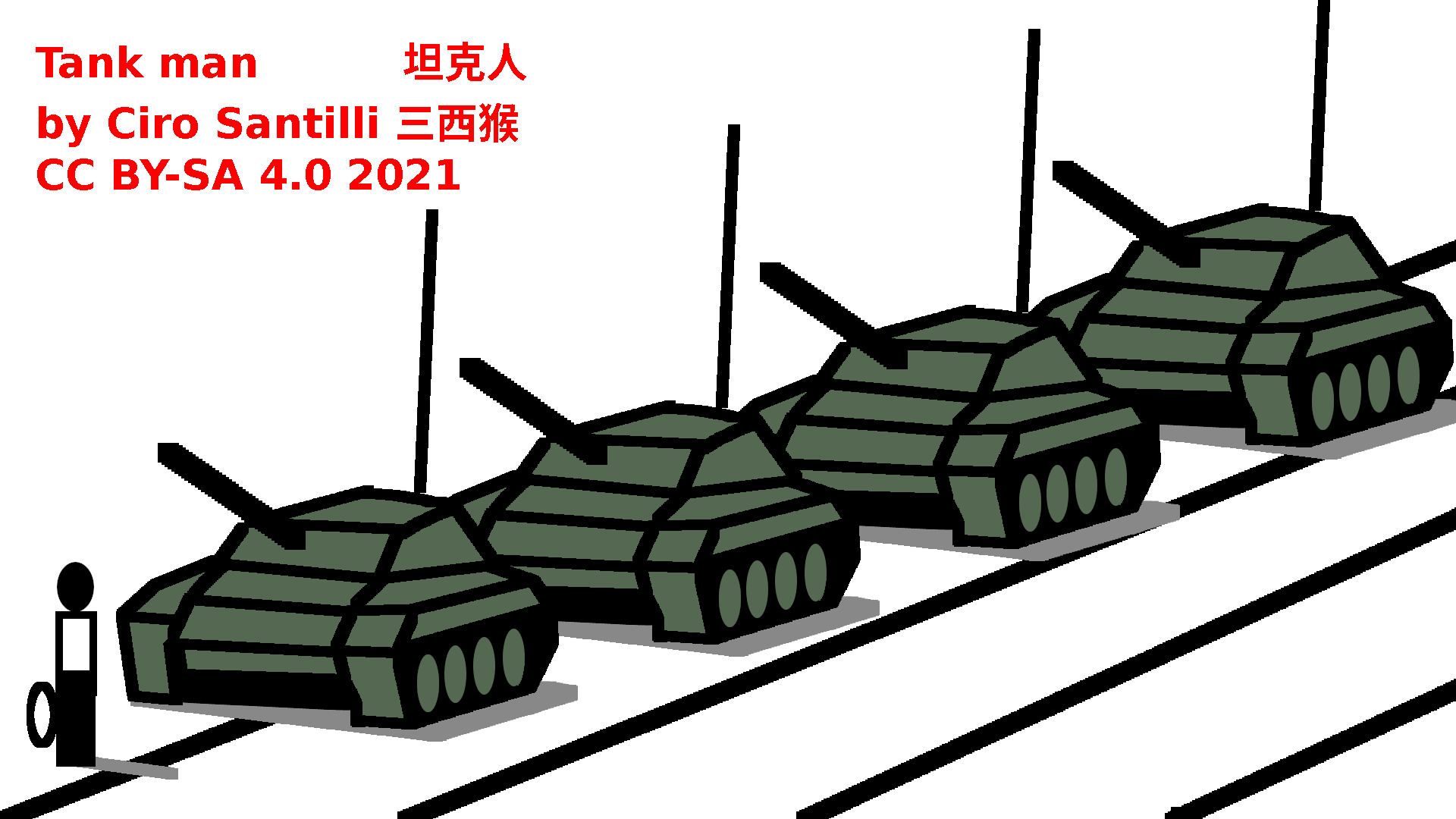
Captions identify creators, dates, licenses and context. The Tank Man illustration is later artwork, not a photograph from 1989.

Students gathered in Tiananmen Square, June 2, 1989
HISTORICAL PHOTO · BEIJINGStudents in the square

June 2, 1989. Photograph by Jiří Tondl; used with permission under CC BY-SA 4.0.

Image and license details ↗
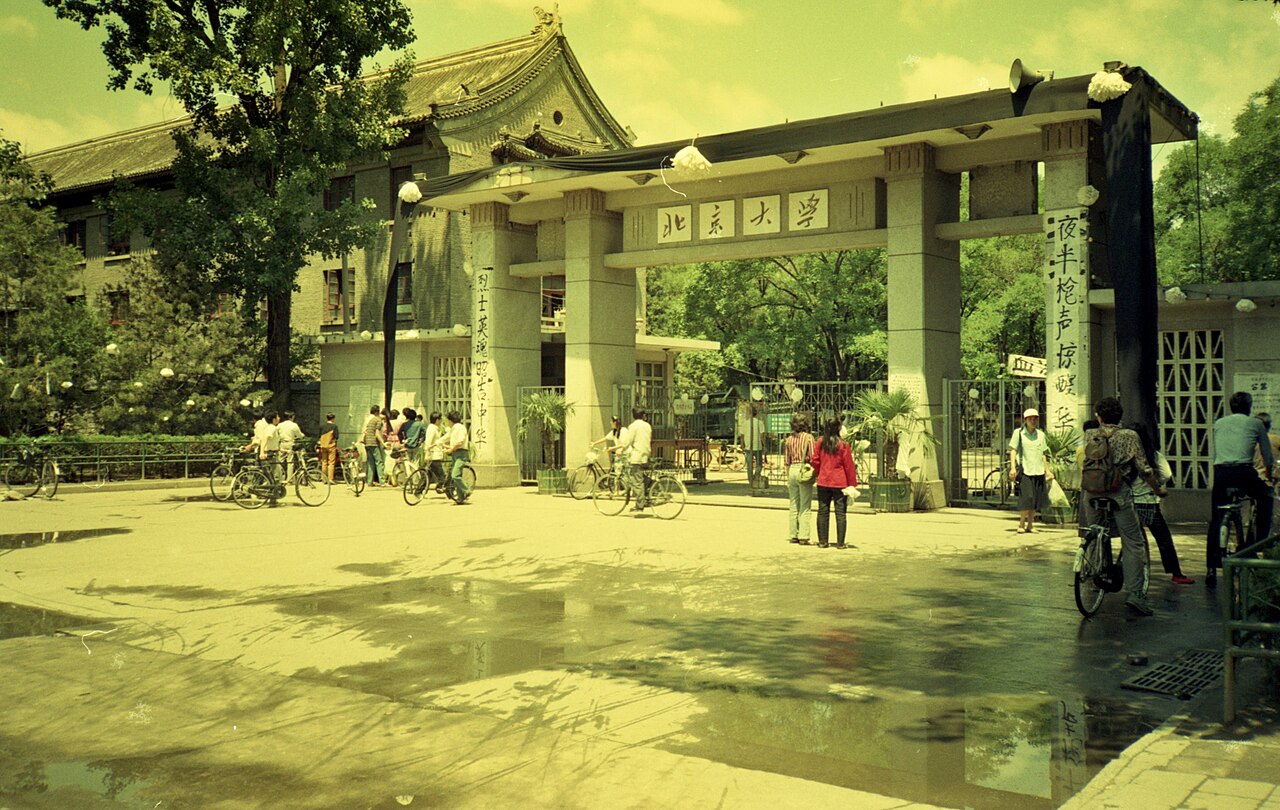
Memorial banner at Peking University’s south gate
JUNE 1989 · MOURNINGA banner at Peking University

June 7, 1989. Photograph by Daiwenchen, CC BY-SA 4.0.

Image record ↗
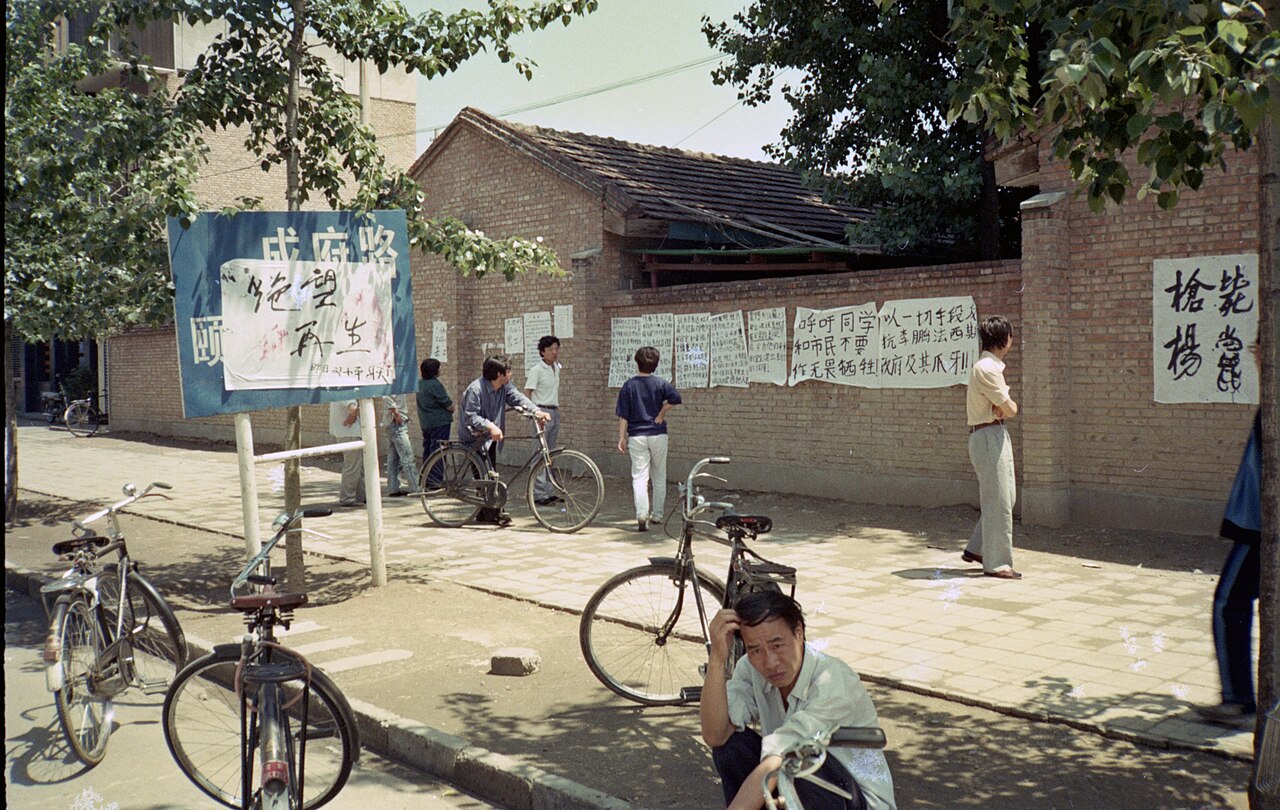
Posters on a street in Haidian, Beijing, June 1989
JUNE 1989 · STREET RECORDPosters in Zhongguancun

Haidian, Beijing, June 7, 1989. Photograph by Daiwenchen, CC BY-SA 4.0.

Image record ↗
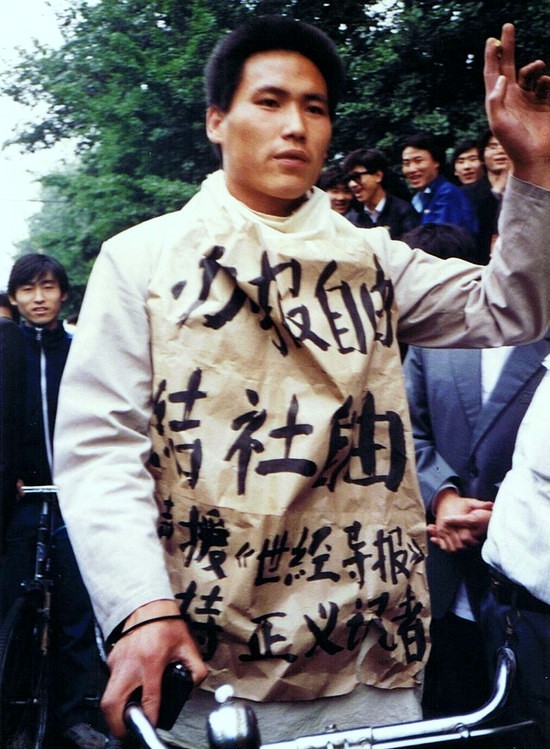
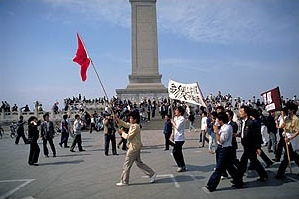
Pu Zhiqiang at a Beijing march on May 10, 1989
HISTORICAL PHOTO · BEIJINGA call for freedom of expression

May 10, 1989. Photograph by Cai Shufang, CC BY 2.5.

Image and license details ↗
Illustration of one person facing a line of tanks
TANK MAN · LATER ARTWORKThe person who stood before the tanks

An artwork by Ciro Santilli, not an original photograph. The Associated Press photograph was made by Jeff Widener on June 5. The man’s identity and later fate remain unconfirmed.

National Gallery of Art record ↗CC BY-SA 4.0 · license
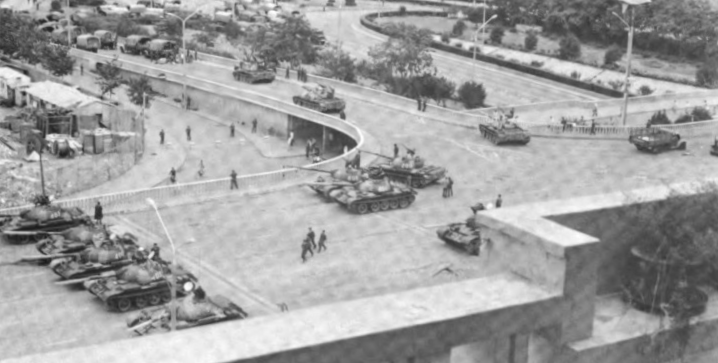
Chinese tanks on a Beijing street in July 1989
HISTORICAL PHOTO · AFTERMATHTanks on a Beijing street

Photographed near the U.S. diplomatic compound in July 1989. It shows the city after the June crackdown, not the night of June 3–4. U.S. federal work, public domain in the United States.

Archive and rights information ↗
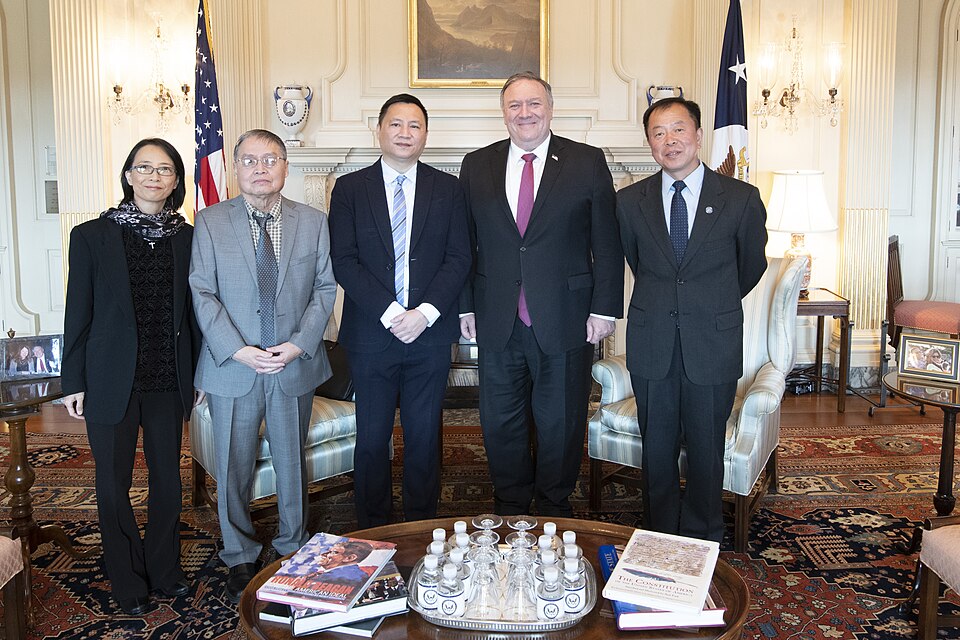
The U.S. Secretary of State meets participants in the 1989 protests, June 2020
OVERSEAS REMEMBRANCE · WASHINGTONStories, thirty years later

June 2, 2020. Photograph by Freddie Everett, U.S. Department of State.

Archive and rights information ↗
01 / Across China

A movement across cities and social groups

Mourning, marches, sit-ins, class boycotts, hunger strikes, worker organizing and street barricades took different forms in different places. Participants did not all share the same position.

BEIJING

Gathering place and military force

From the April mourning, Tiananmen Square became a sustained gathering place. Teachers, journalists, workers and residents joined students. On June 3–4, troops entered the city and fired on crowds. Many deaths occurred on surrounding roads and at other sites in Beijing.

SHANGHAI

Marches, worker support and blocked transport

Students held mourning and support actions from mid-April, calling for reform, press freedom and action against corruption. After martial law was announced, students and workers continued gathering; road and rail disruptions were reported in early June. Accounts differ.

CHENGDU

Support actions and the June 5 crackdown

Students and residents gathered at Tianfu Square and elsewhere. Amnesty International’s August 1989 report said at least 300 civilians were reported killed in Chengdu, while noting that repression and fear made the actual number impossible to determine.

XI’AN · WUHAN · NANJING · GUANGZHOU

Local events had their own course

Students in many provincial capitals marched, sat in, went on hunger strike or boycotted classes. Workers and residents also took part in some cities. Blockades, clashes, arrests and deaths were reported; local events cannot be summarized by Beijing alone.

HISTORICAL RESEARCH

Research emphasizes the movement’s cross-regional and cross-class character. Describing it only as a Beijing student movement overlooks participants elsewhere and the experiences of people beyond the capital.

Read the Oxford research overview ↗
02 / After the crackdown

Trials, exile and a long search for answers

POLITICAL PURGES

Zhao Ziyang was removed after advocating a more moderate response and remained under house arrest until his death. Political reform narrowed, while controls on news and public assembly tightened.

ARREST AND EXILE

Authorities issued wanted lists and pursued student leaders and others. Some were imprisoned or barred from public political activity; others left China and continued speaking abroad. Worker organizers’ experiences received less international coverage.

FAMILIES AND REMEMBRANCE

The Tiananmen Mothers have documented names and testimony and called for disclosure, investigation and redress. They have faced surveillance and restrictions while continuing to record and ask questions.

PUBLIC MEMORY

Public discussion and commemoration have long been restricted. Images, oral histories, family archives, diplomatic documents and overseas memorials preserve scattered traces.

03 / International responses

Condemnation, sanctions and changed relations

Governments focused on shootings and deaths, but their responses were not identical. Human-rights concerns, diplomacy, trade and Cold War calculations all influenced decisions.

UNITED STATES

President George H. W. Bush condemned the use of force and suspended arms sales and high-level military contacts. Congress and civic groups pressed for sanctions and accountability. The administration also maintained diplomatic communication; an envoy traveled secretly to Beijing in late June.

U.S. Department of State history ↗
EUROPEAN COMMUNITY

In June 1989 the European Community issued a political declaration, agreed to an arms embargo and announced other measures. National implementation and scope were not wholly uniform.

Government background on sanctions ↗
JAPAN

The Japanese government expressed concern and regret on June 5. It also weighed damage to relations and the consequences of sanctions, seeking to keep diplomatic channels open.

Japanese Ministry of Foreign Affairs ↗
OVERSEAS COMMUNITIES

Rallies and vigils took place in Hong Kong, Taiwan, North America, Europe and elsewhere. Students, exiles, journalists and rights groups helped keep records and public discussion alive.

Browse local archive pages ↗

Next

Leave a quiet moment for remembrance.

Go to the memorial ↗